
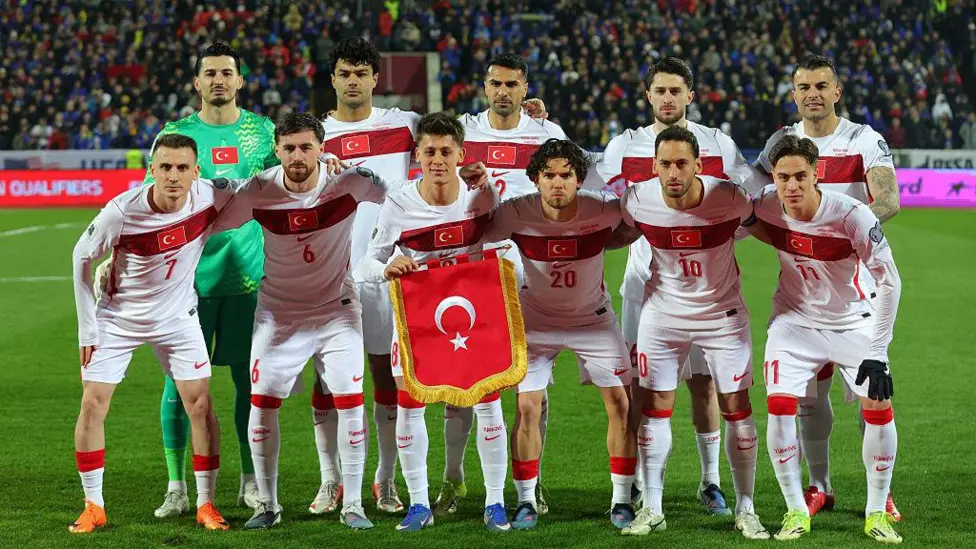
Turkey arrive at the 2026 FIFA World Cup as one of the tournament’s most intriguing outsiders. While bookmakers rate them among the long shots for the title, the team has quietly built a reputation as a dangerous opponent capable of upsetting more established football nations.
What can be expected from Turkey?
Turkey enter the tournament carrying the familiar label of “dark horses.” Although they needed the play-offs to secure qualification, many observers believe they have the quality to challenge for top spot in Group D.
Head coach Vincenzo Montella has assembled an energetic, high-pressing side built around technical quality and tactical flexibility. His preferred 4-2-3-1 system is designed to maximize the strengths of Turkey’s two biggest stars: Arda Güler and Kenan Yıldız.
Güler is given freedom to roam across attacking areas and create chances, while Yıldız operates from the left flank, frequently cutting inside to attack defenders. Midfield is orchestrated by experienced playmaker Hakan Çalhanoğlu, whose vision and composure help control the tempo of matches.
For a squad with this level of talent, reaching the knockout stages should be considered the minimum objective.
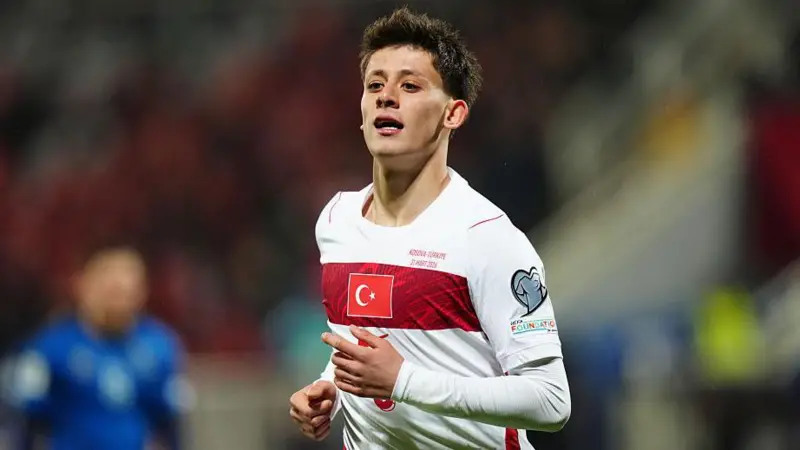
Turkey’s strengths
A new generation of stars
Turkey possess two of the most exciting young attacking players in world football.
- Arda Güler has developed into a key figure for both club and country, combining creativity, vision, and goal-scoring ability.
- Kenan Yıldız offers pace, dribbling, and direct attacking threat, making him one of the most dangerous wide forwards in the tournament.
Both players have the ability to change matches individually.
Aggressive pressing
Montella’s side plays with intensity. Their high-pressure approach can overwhelm opponents, particularly teams that struggle to build attacks from the back.
Strong possession game
Turkey are comfortable controlling possession and dictating the pace of matches. This could prove particularly valuable in the demanding summer conditions expected during the tournament.
Tactical flexibility
While the preferred formation is 4-2-3-1, Turkey can switch to a more defensive 5-4-1 system against stronger opponents, making them adaptable to different challenges.
Turkey’s weaknesses
Defensive vulnerabilities
Turkey’s defence is often considered the team’s weakest area. Their aggressive style requires a high defensive line, which can leave space behind for opponents to exploit.
Exposure to counter-attacks
Because they commit players forward and press aggressively, they can be vulnerable when possession is lost.
Lack of an established striker
Turkey do not possess a proven world-class centre-forward.
Deniz Gül, a tall and promising striker currently playing for Porto, is viewed as a talent for the future but may not yet be ready to lead the attack at the highest level. During qualification, winger Kerem Aktürkoğlu frequently contributed goals to compensate for this weakness.
Players to watch
Kenan Yıldız
The Juventus forward was among Turkey’s leading scorers during qualification and is renowned for his dribbling ability and creativity in one-on-one situations.
His ability to cut inside from the left wing and create chances makes him one of Turkey’s most important attacking weapons.
Arda Güler
The Real Madrid midfielder is already regarded as one of the brightest young talents in world football.
He contributed both goals and assists during qualification and has become the focal point of Turkey’s attack. His technical ability, vision, and long-range shooting make him a constant threat.
Ferdi Kadıoğlu
Known for his attacking runs from full-back, Kadıoğlu provides width and energy on the left side.
He was the only Turkish player to appear in every qualifying match.
Hakan Çalhanoğlu
The experienced Inter midfielder brings leadership, passing quality, and control to the center of the pitch.
His set-piece delivery remains one of Turkey’s major strengths.
The man behind the team
Vincenzo Montella
The former Italian international striker has transformed Turkey into a disciplined and modern side.
Montella became the first foreign coach to guide Turkey to consecutive major tournaments and has been praised for creating a team that reflects his own playing style: technical, passionate, and attack-minded.
Following qualification, he famously stated:
“I may be a foreigner, but just being part of all this makes me so proud. I’m now Turkish at heart.”
How Turkey qualified
Turkey finished behind Spain in their qualifying group before successfully navigating the play-offs.
They defeated Romania and then Kosovo to secure their place at the 2026 FIFA World Cup.
Throughout qualification, Turkey impressed with their attacking football, scoring 17 goals in six group-stage matches and rarely failing to find the net.
A fact to impress your friends
Turkey’s all-time leading goalscorer is Hakan Şükür, who scored 51 goals for the national team between 1992 and 2007.
After leaving Turkey in 2016 amid political controversy, he settled in San Francisco in the United States. His name has largely disappeared from official football discussions in Turkey despite his historic achievements.
Why this generation matters
Turkey’s last great World Cup success came in 2002, when they finished third after defeating South Korea in the playoff for third place.
The current generation is hoping to recreate that achievement.
Interestingly, neither Arda Güler nor Kenan Yıldız had even been born when Turkey reached the semi-finals in Japan and South Korea. Today, those two young stars have become the faces of a national team eager to return to the global spotlight.
If Turkey are to produce another memorable World Cup run, Güler and Yıldız will almost certainly be at the centre of it.
Turkey’s World Cup history
Turkey’s World Cup record is relatively modest, but it includes one remarkable achievement.
Best result:
🥉 Third place – 2002 FIFA World Cup
During that tournament, Turkey:
- Defeated Japan in the Round of 16
- Beat Senegal in the quarter-finals
- Lost narrowly to Brazil in the semi-finals
- Defeated South Korea in the third-place match
More than two decades later, Turkish supporters hope the 2026 squad can produce another historic run on football’s biggest stage.